McDONOUGH CONSTRUCTION RENTALS


At McDonough we offer a variety of rental equipment to meet your job site’s vertical access needs. Our extensive fleet of construction hoists, transport platforms, personnel manlifts, and mast climbers is strategically positioned in Anaheim, Atlanta, Houston, and Tampa to service projects across the United States. Our turnkey rental services will ensure that your project runs smoothly from start to finish.
Contact us today to discuss your project needs with one of our Regional Sales Managers.
Turnkey Rental Services
- Layout Drawings
- Installation
- Dismantle
- Preventative Maintenance
- Permitting
- Equipment Inspections
- Job Site Consultation
- Loading Docks
- Operators
- Standby Technicians
- Common Tower
Testimonials
- Sorry, no posts matched your criteria.
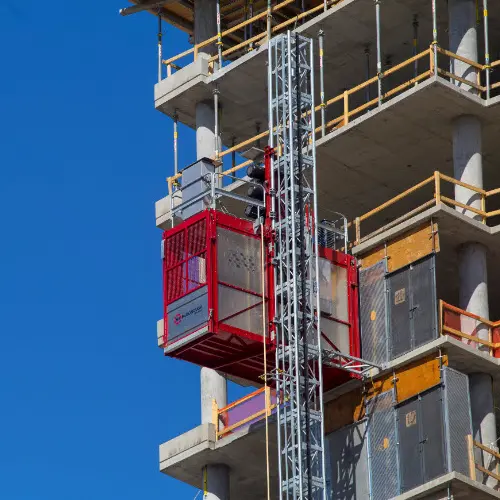
Construction Elevators
Whether you call it a construction hoist, buck hoist or temporary elevator, we have a solution for your project. ANSI A10.4 code compliant.
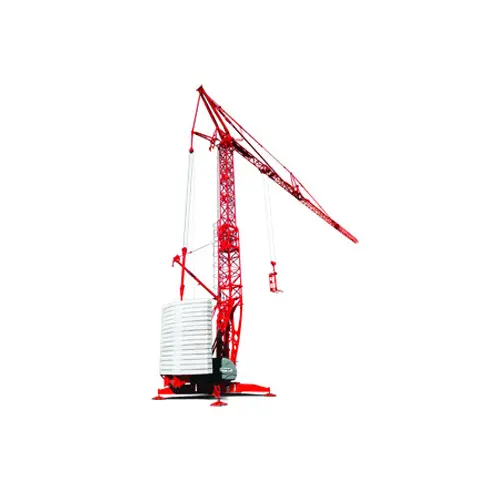
Self-Erect Tower Cranes
Simple, rapid set-up and high performing Potain self-erecting tower cranes are the newest addition to McDonough’s fleet.

Transport Platforms
Our transport platforms are a great alternative when traditional construction
hoists don’t fit your project requirements. ANSI A10.4 code compliant.
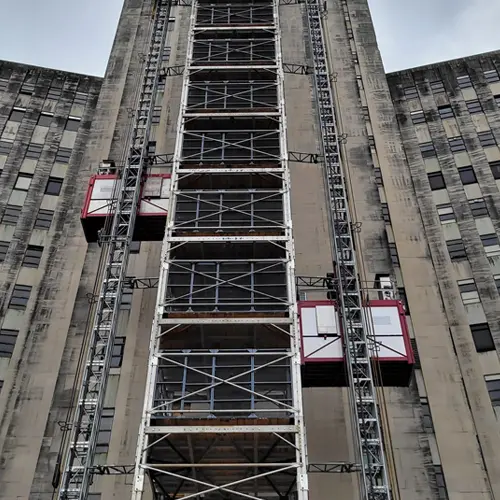
Common Tower
A common tower or Common platform is a fully customizable temporary structure, that can accommodate any structure or setback.
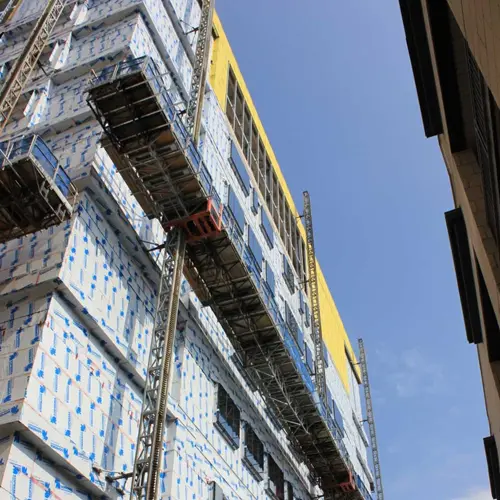
Mast Climbers
Our mast climbers are the best vertical access solution for all of your commercial building facade work.
Who We Are
ABOUT McDONOUGH
McDonough. Elevating Project Success Since 1976
At McDonough we offer a variety of rental equipment to meet your job site’s vertical access needs. Our extensive fleet of industrial elevators, construction hoists, tower cranes, transport platforms, material lifts, and mast climbers is conveniently positioned in Anaheim, Atlanta, Houston, and Tampa. McDonough maintains local service capabilities in most major cities across the United States to better serve our clients. Our turnkey rental services will ensure that your project runs smoothly from start to finish.
Frequently Asked Questions
Yes. Self-erecting tower cranes are an excellent fit for cold-formed steel framing (CFSF) projects because they provide efficient overhead material handling while reducing congestion on tight jobsites.
CFSF contractors commonly use self-erecting cranes to move prefabricated wall panels, steel bundles, sheathing, framing materials, and mechanical equipment.
The crane’s ability to cover large portions of the site from a single position helps streamline vertical construction and improve framing productivity, especially on multifamily, hospitality, and student housing projects.
Yes. Transport platforms are often an excellent solution for tight urban jobsites because of their compact footprint and reduced space requirements.
Benefits include smaller base footprint, reduced congestion, easier site integration, less staging disruption, and efficient material movement. They are commonly used on infill projects and limited-access jobsites where maximizing usable space is important.
In many cases, yes. Transport platforms can provide a more economical solution for projects that do not require the size or capacity of a full construction hoist system.
Often selected for smaller projects, mid-rise buildings, renovations, tight urban developments, and budget-conscious projects. Because transport platforms generally require smaller footprints and less complex installations, they can help reduce overall project costs while still improving vertical material movement.
Yes. Construction hoists can often be installed without a tower crane depending on the site logistics and equipment available. Mobile cranes are commonly used during initial installation, but installation methods vary based on hoist height, site access, building configuration, and crane availability.
Our team can work with your project team to determine the most efficient installation approach for your site.
Yes. Construction hoists can significantly improve project schedules by providing faster and more efficient vertical transportation for workers and materials.
Benefits may include reduced stair travel time, faster material delivery, improved trade coordination, increased worker productivity, reduced labor fatigue, and better access throughout the building.
Yes. Self-erecting tower cranes can be installed on concrete podium decks provided the project’s engineer confirms the structure and shoring system meet the required allowable ground bearing pressure.
Typical requirements include approximately 3,400 lbs./sqft allowable ground bearing pressure and proper shoring and load distribution beneath the crane mat area.
Each podium installation should be reviewed individually based on crane configuration and structural engineering requirements.
In many cases, yes. A self-erecting tower crane can reduce the number of telehandlers needed on a project by providing centralized overhead material distribution across the site.
While telehandlers may still be used for ground-level staging and support tasks, the crane can handle much of the vertical material movement more efficiently.
This can help reduce site congestion, improve safety, minimize ground traffic, reduce material handling delays, and free up valuable staging space. Many contractors use self-erecting cranes specifically to improve material flow and reduce the operational challenges associated with multiple telehandlers on tight jobsites.
Yes. Self-erecting tower cranes can often reduce their overhead swing radius overnight using luffing mode and weathervaning configurations.
While the crane remains fixed on its approximate 25 ft x 25 ft base area, the jib can be positioned in a raised or reduced-radius configuration to help remain within property lines or minimize air rights concerns.
This flexibility is especially valuable on tight urban jobsites, infill developments, dense downtown construction sites, and projects near adjacent structures or roadways.
Yes. Self-erecting tower cranes can be relocated during construction if project logistics require additional coverage or phased building operations.
Our team can work with contractors to coordinate crane remobilization, site logistics planning, schedule coordination, freight and setup pricing, and optimized crane placement strategies.
Relocating the crane during construction can help maximize crane utilization and reduce overall project lifting costs.
Yes. Self-erecting tower cranes can help reduce labor costs during vertical construction by improving material handling efficiency and reducing reliance on multiple telehandlers throughout the site.
Benefits may include reduced telehandler operators, less repeated material handling, faster framing cycles, improved crew productivity, and reduced jobsite congestion.
By centralizing material distribution overhead, contractors can often streamline framing operations and improve overall site coordination.
Yes. Self-erecting tower cranes are widely used on wood-frame multifamily and mid-rise construction projects because they help move framing materials efficiently throughout the site while reducing telehandler congestion.
Especially useful during vertical framing operations where contractors need to move lumber bundles, wall panels, roof trusses, sheathing, and pallets of material.
A self-erecting crane allows crews to receive materials directly at elevated working areas, helping improve productivity and reduce repeated material handling across the jobsite.
Yes. Transport platforms help reduce labor fatigue by minimizing repeated stair climbing and manual material carrying throughout the project.
Benefits include faster access to work areas, reduced physical strain, improved worker productivity, better material flow, and reduced downtime. This can help crews work more efficiently throughout the day while improving overall site logistics.
A large mobile crane is generally not required for the full erection process of a self-erecting tower crane.
In most cases, a small mobile crane or forklift is only needed initially to assist with placing counterweights during installation. After that, the crane completes much of the erection process through its built-in self-erecting system.
This helps reduce setup costs, site disruption, and overall mobilization complexity compared to traditional tower cranes.
Self-erecting tower cranes help improve framing productivity by delivering materials directly where crews need them during vertical construction.
Instead of relying solely on multiple telehandlers moving materials throughout the site, a self-erecting crane can deliver framing bundles directly to elevated decks, reduce material bottlenecks, improve staging efficiency, reduce unnecessary equipment movement, and keep framing crews working continuously.
This often helps contractors speed up the vertical buildout process while maintaining a cleaner and more organized jobsite.
Installation timelines vary depending on hoist height, number of landings, site access, crane availability, weather conditions, and project logistics.
In many cases, the initial installation can be completed within a few days once the site is prepared and crane access is available. Additional climbing and tie-in work may occur throughout the project as the building progresses vertically.
Under normal site conditions and favorable weather, a self-erecting tower crane can typically be installed in approximately 10 hours.
However, installation schedules are commonly planned over two 10-hour workdays to allow time for site preparation, equipment delivery, counterweight placement, crane erection, testing and commissioning, and coordination with other trades.
Actual installation timelines may vary depending on weather, access, site logistics, and crane configuration.
Construction hoists can service a wide range of building heights depending on the hoist model, tower configuration, and project requirements.
Commonly used on mid-rise multifamily projects, high-rise towers, stadium renovations, hotels, commercial developments, hospitals, and industrial plants.
Hoists can typically be configured with multiple landings and stops throughout the building as the structure progresses vertically. Final height capabilities depend on the specific hoist model, tie-in engineering, and site logistics.
Construction hoists can be configured with multiple stops and landings throughout the building as construction progresses. The number of stops depends on building height, project logistics, trade access needs, and hoist configuration.
Hoists are commonly installed with landings at ground level, intermediate working floors, and roof access levels. Additional landings can often be added as the building progresses vertically.
Self-erecting tower cranes are commonly used on projects ranging from approximately 4 to 8 stories depending on the crane model, hook height configuration, material weights, and jobsite logistics.
For example, the Liebherr 125K offers hook height configurations ranging from approximately 58 feet to 131 feet depending on tower setup.
Frequently used on mid-rise multifamily construction, student housing, boutique hotel projects, wood-frame developments, and CFSF projects. Every project should be evaluated individually based on building height, framing system, pick weights, and site constraints.
Rental pricing varies depending on hoist model, building height, rental duration, number of landings, installation requirements, freight and mobilization, and single vs dual car setup.
Additional costs may include installation and dismantle, engineering, freight, climbing services, remobilization, and maintenance support. Our team can provide project-specific pricing based on your schedule and site logistics.
Monthly rental rates for a self-erecting tower crane typically range from approximately $13,000 to $16,000 per month depending on crane make and model, rental duration, freight requirements, site logistics, hook height configuration, mobilization requirements, and project location.
Additional costs such as freight, installation, dismantle, engineering, and remobilization may vary depending on project conditions.
Self-erecting tower cranes are designed with a compact footprint compared to traditional tower cranes. A typical crane setup may require approximately a 25 ft x 25 ft base area depending on the crane model, ballast configuration, and site conditions.
These cranes help reduce laydown area requirements, telehandler congestion, material staging conflicts, and jobsite traffic. Their compact footprint makes them especially useful on tight urban infill lots and limited-access construction sites where maximizing usable space is critical.
Self-erecting tower cranes are designed specifically for projects with limited space and challenging logistics, making them a strong solution for tight urban jobsites and infill construction.
Benefits include compact footprint, reduced laydown requirements, reduced telehandler traffic, improved material flow, faster vertical buildout, less site congestion, flexible hook height configurations, and reduced swing radius options.
Because the crane can distribute materials overhead from a centralized location, contractors can maximize usable staging space and improve coordination between trades on dense construction sites.
Contractors are typically required to provide approximately 3,400 lbs./sqft allowable ground bearing pressure beneath the crane setup area.
This requirement is commonly achieved through compacted hard gravel, reinforced concrete pads, engineered foundation systems, or podium shoring systems where applicable.
Final ground preparation and engineering requirements should always be reviewed by the project’s engineer of record based on crane configuration and site conditions.
To provide accurate pricing and project recommendations, we typically need: building height, number of stops/landings, project location, estimated install date, rental duration, single or dual car preference, available site power, crane availability for installation, and building use and access requirements.
Additional details such as site logistics, loading conditions, and schedule requirements can also help us recommend the best hoist solution for your project.
A construction hoist, also known as a construction elevator or personnel hoist, is a temporary vertical transportation system used on construction sites to safely move workers, tools, and materials between floors during construction.
Commonly installed on: high-rise buildings, mid-rise multifamily projects, stadium renovations, hotels, hospitals, and commercial developments.
Unlike standard passenger elevators, construction hoists are designed specifically for active jobsites and heavy-duty construction use. Modern construction hoists typically feature enclosed cars, variable frequency drives for smooth operation, and high lifting capacities for both personnel and material transport.
A self-erecting tower crane is a compact tower crane designed for fast installation, efficient material handling, and tight jobsites. Unlike traditional tower cranes, self-erecting cranes can typically be installed much faster and with less site disruption, making them ideal for mid-rise construction, urban infill projects, multifamily developments, student housing, and boutique hotels.
Commonly used on wood-frame and cold-formed steel framing (CFSF) projects because they allow contractors to move framing materials, pallets, sheathing, wall panels, and other building materials efficiently throughout the site while reducing telehandler congestion and improving overall jobsite productivity.
Many self-erecting cranes also feature wireless remote operation, compact swing radiuses, and flexible hook height configurations to adapt to a variety of construction applications.
A transport platform is a vertical lifting system designed to move materials and workers safely throughout a construction site using a mast-climbing platform system.
Commonly used on mid-rise multifamily projects, renovations, tight urban jobsites, limited-access construction sites, and smaller commercial projects.
Compared to larger construction hoists, transport platforms often provide a smaller footprint and more economical solution for projects with moderate lifting demands.
Most construction hoists require 480V, 3-phase power, 60 Hz electrical service. Power requirements vary depending on hoist model and configuration.
For example, US-60 series hoists typically require 100 amp service, while NOV 3242 hoists typically require 150 amp disconnects per car.
Temporary generators may also be used depending on project conditions and available site power.
Self-erecting tower cranes typically require 480V, 3-phase power, and a minimum 50 kW generator capacity if temporary power is being used.
Final electrical requirements may vary slightly depending on crane model and site conditions.
The right construction hoist depends on several factors including: building height, number of workers, material volume, schedule demands, site logistics, available power, and single vs dual car requirements.
For example, the US-60 series offers 6,000 lb lifting capacity per car, while the NOV 3242 series offers up to 7,200–8,000 lb lifting capacity depending on configuration.
Single-car hoists are often suitable for smaller or less congested projects, while dual-car hoists are commonly used on larger jobsites with heavy manpower and material demands. Our team can help evaluate your project and recommend the best hoist configuration based on productivity goals and jobsite logistics.
Commonly used on multifamily construction, student housing, boutique hotels, mid-rise wood-frame projects, cold-formed steel framing (CFSF), tight urban infill lots, mixed-use developments, podium-style construction, and limited-access jobsites.
Especially effective on projects ranging from approximately 4 to 8 stories where contractors need efficient vertical material handling without the larger footprint and logistics associated with traditional tower cranes.
Often selected for projects in dense urban environments because of their compact footprint, reduced swing radius options, and ability to improve jobsite organization while minimizing telehandler traffic.
Transport platforms are commonly used on renovations, mid-rise multifamily construction, tight urban infill projects, smaller commercial developments, budget-conscious projects, and limited-access jobsites.
They are especially effective on projects where contractors need efficient vertical transportation without the larger footprint or capacity requirements of a full construction hoist system.
Transport platform capacities vary by model and configuration.
For example, the A42 transport platform offers approximately 4,000 lb lifting capacity, up to 10 passengers, and maximum mast heights up to approximately 300 ft depending on configuration.
Capacity requirements should always be reviewed based on the project’s material handling needs.
A personnel hoist is designed to transport workers, tools, and materials safely throughout an active construction site, while a material hoist is typically intended primarily for transporting materials only.
Personnel hoists generally include fully enclosed cars, passenger-rated safety systems, smooth acceleration and deceleration, interior lighting, emergency lowering systems, and safety governors.
Material hoists may have fewer passenger accommodations and are often used strictly for moving construction materials vertically.
Many modern construction hoists can safely transport both personnel and materials depending on the project requirements and local code compliance.
The primary difference is capacity, footprint, and intended use.
Construction hoists are typically larger systems designed for higher capacities, heavy manpower movement, large-scale vertical construction, and high-rise projects.
Transport platforms are commonly used for smaller projects, mid-rise construction, renovations, tight jobsites, and moderate material movement. Transport platforms generally require less space and can be a more economical option for projects that do not require a full-size construction hoist.
Construction hoists are typically used once projects reach heights where stairs alone become inefficient, unsafe, or impractical for moving workers and materials.
Commonly installed on: mid-rise and high-rise construction, multifamily developments, stadium renovations, hotels, hospitals, and commercial towers.
In some states, including California, construction hoists may also be required by jobsite safety regulations once buildings exceed certain height or access thresholds.
Hoists help improve worker productivity, material flow, site safety, schedule efficiency, and trade coordination. Many contractors install hoists early in vertical construction to reduce delays caused by manual material movement and stair access.
Construction hoists are typically installed early in the vertical construction phase once the structure reaches heights where manual access becomes inefficient.
Many contractors install hoists as soon as multiple elevated work areas are active, stair access slows productivity, material movement increases, or trade coordination becomes more complex. Installing a hoist early can help improve site logistics and maintain schedule efficiency throughout the project lifecycle.
A self-erecting tower crane is typically a strong option when a project begins experiencing material flow bottlenecks, limited staging space, or heavy telehandler traffic during vertical construction.
Contractors often choose self-erecting cranes on mid-rise multifamily projects, student housing, boutique hotels, wood-frame construction, cold-formed steel framing (CFSF), and tight urban infill developments.
Unlike telehandlers, a self-erecting crane can provide full overhead material coverage across large portions of the site from a single location. This helps reduce jobsite congestion, minimizes repeated material handling, and allows framing crews to receive materials directly where they are needed.
A transport platform may be a better fit when site space is limited, budgets are tighter, material demands are moderate, building heights are mid-rise, access requirements are simpler, or the project does not require a large dual-car hoist system.
Commonly used on renovations, mid-rise multifamily, tight urban infill projects, and smaller commercial developments. They provide efficient vertical transportation while maintaining a smaller footprint and lower overall project cost.